
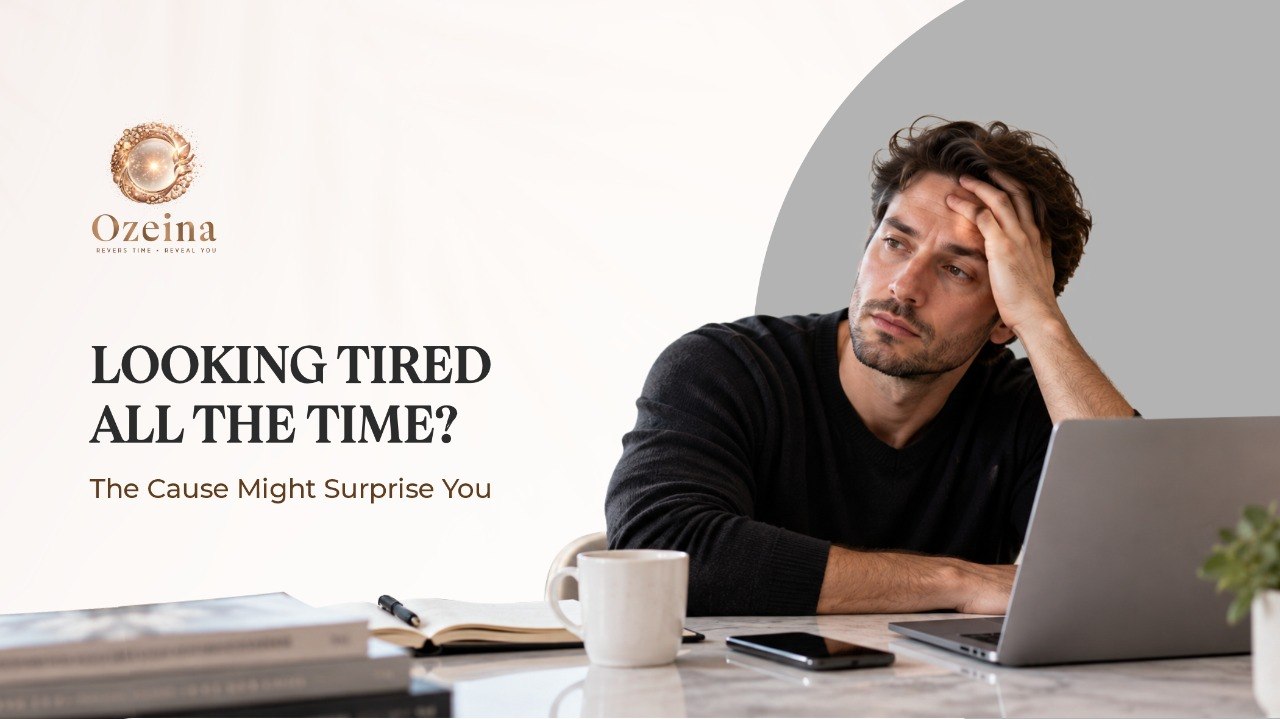
You slept enough. You had your coffee. You even tried to make an effort with your skincare.
And somehow, you still look tired.
Sometimes it’s not actually about being tired.
The face can start showing things that have very little to do with how rested you feel. Dull skin, uneven tone, dehydration, loss of volume, fine lines, and changes in skin texture can all contribute to that constantly tired appearance.
And that’s often why simply adding another concealer or trying a new moisturizer doesn’t quite solve it.
Your Face Can Show More Than Your Sleep
When people say, “You look tired,” they aren’t necessarily noticing dark circles alone.
They may be noticing several small changes at once.
Your skin may have lost some of its brightness. Fine lines may be more visible. Your complexion may look uneven. The skin around your eyes may appear less refreshed. You may have lost some of the firmness you had before.
None of these things mean there’s something wrong with you.
They’re simply changes that can happen over time.
The question is what you want to do about them.
Sometimes It’s Your Skin, Not Your Schedule
There are plenty of reasons skin can look tired.
Sun exposure can contribute to uneven pigmentation and visible signs of skin aging. Dehydration can make fine lines look more noticeable. Stress and poor sleep can affect how refreshed your complexion appears.
And then there are changes that happen naturally as the skin ages.
Collagen production decreases with age, while the skin can gradually become thinner and less elastic.
That’s why someone can feel perfectly fine and still feel like their reflection looks more exhausted than they do.
This Is Where Facial Rejuvenation Comes In
Facial rejuvenation isn’t necessarily about changing your face.
In fact, the best approach is often much more subtle.
It can be about improving the quality and appearance of the skin so that you look more refreshed without looking noticeably “done.”
Depending on your concerns, this might involve treatments focused on:
The right treatment depends on what you’re actually trying to improve.
That’s why a consultation should come before choosing a treatment.
You May Not Need the Most Intensive Treatment
This is worth saying because aesthetic treatments are often marketed as though more is automatically better.
It isn’t.
If your main concern is dull, dehydrated skin, you may not need an aggressive resurfacing treatment.
If pigmentation is your concern, a completely different approach may make more sense.
If you’re noticing fine lines and loss of firmness, your provider may recommend another combination altogether.
Good cosmetic treatments should be selected around your skin and your goals, rather than whatever treatment happens to be trending.
Anti-Aging Doesn’t Have to Mean Looking Different
The phrase anti aging treatments can sometimes make it sound as though you’re trying to fight your face.
That’s not really the point.
A more thoughtful approach is about supporting skin quality and addressing the changes that bother you.
Maybe you want your skin to look brighter.
Maybe you want to soften the appearance of fine lines.
Maybe you simply want to look as rested as you actually feel.
Those are very different goals from trying to look 20 years younger.
And the distinction matters.
Don’t Ignore the Basics
Professional treatments can be useful, but they aren’t a replacement for everyday skin care.
Sun protection remains one of the most important things you can do for your skin.
According to the American Academy of Dermatology, using a broad-spectrum, water-resistant sunscreen with SPF 30 or higher can help protect against the UV exposure that contributes to premature skin aging.
Your skincare routine, sleep, nutrition, hydration, stress levels, and overall health matter too.
Think of treatments as one part of the picture, not the entire picture.
Look at the Whole Face, Not One Feature
One of the easiest mistakes is focusing on a single thing.
“I need to fix my under-eyes.”
“I need to get rid of this line.”
“I need to treat these spots.”
But sometimes what makes a face look tired isn’t one specific feature. It’s the combination of skin tone, texture, firmness, and hydration.
A good provider will look at the bigger picture before recommending wellness services or aesthetic treatments.
That can lead to a much more natural result.
The Ozeina Approach
At Ozeina, aesthetics sit within a broader approach to wellness.
The goal isn’t to chase every new treatment or make your face look completely different.
It’s about understanding what has changed, what you actually want to improve, and choosing treatments thoughtfully.
Because looking refreshed doesn’t necessarily mean looking younger.
Sometimes it simply means looking more like yourself on a really good day.
Register now!
FAQs
1. Why do I look tired even when I get enough sleep?
Skin texture, pigmentation, dehydration, fine lines, loss of firmness, and other changes can contribute to a tired appearance even when you’re well rested.
2. What does facial rejuvenation include?
It can include different treatments designed to improve concerns such as fine lines, uneven tone, skin texture, pigmentation, or loss of firmness. The right option depends on your skin and goals.
3. Are anti aging treatments only for older adults?
No. People may explore preventive or corrective treatments at different stages of life depending on their skin concerns and preferences.
4. How do I know which cosmetic treatment is right for me?
Start with a professional consultation. Your provider can assess your skin, discuss your concerns, and recommend an approach suited to your goals.
5. Can treatments make me look more refreshed without changing my appearance?
That can be the goal of a thoughtful aesthetic treatment plan. Improving skin quality and addressing specific concerns can create a more refreshed appearance without trying to change your natural features.