
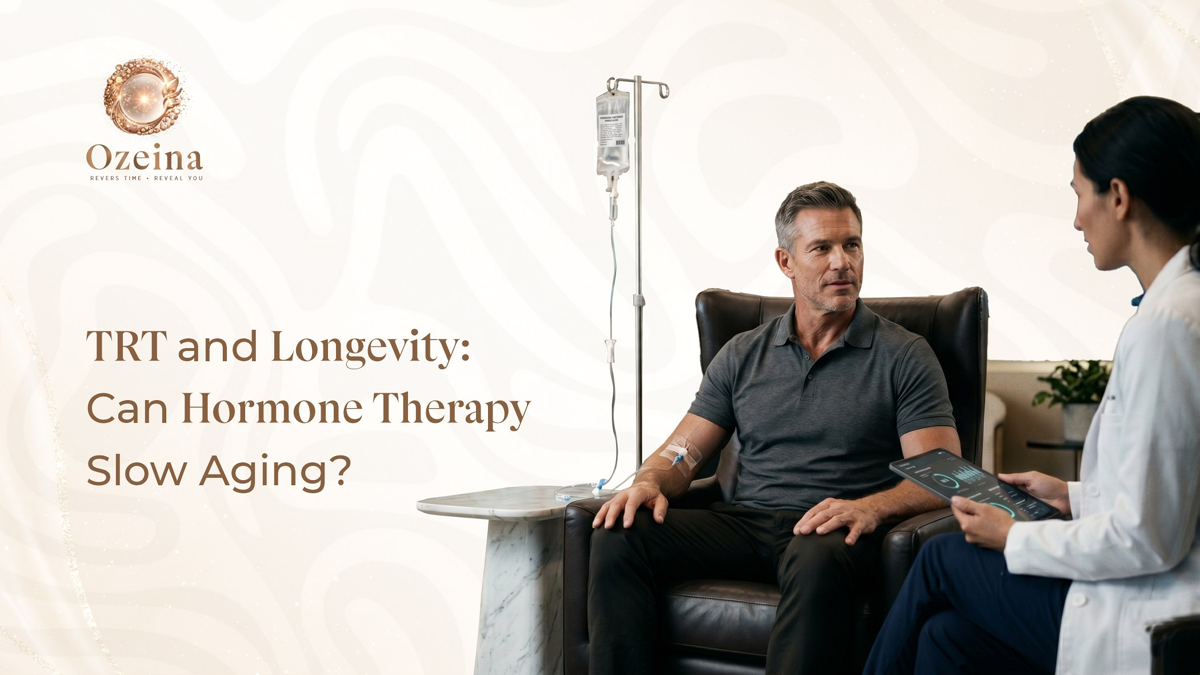
For years, people treated aging like a countdown.
You get tired more easily. Your recovery slows down. Your workouts stop feeling effective. Your focus drops. And everyone tells you it is “just age.”
But lately, people are questioning that.
They are paying more attention to energy, hormones, recovery, sleep quality, and long-term wellness. This is one reason conversations around TRT, hormone optimization, and longevity treatments are growing so quickly.People do not just want to live longer anymore. They want to feel good while doing it.
What Is TRT?
TRT stands for testosterone replacement therapy.
It is a medically supervised treatment used to support people with low testosterone levels.
Testosterone naturally declines over time. According to the Cleveland Clinic, testosterone levels in men can gradually decrease after age 30.
That decline can affect:
This is usually where people first notice something feels “off.” Not dramatic. Just different. Simple takeaway: TRT is designed to restore hormonal balance when testosterone levels become clinically low.
Why Testosterone Matters More Than People Think
Most people connect testosterone only with muscle growth.
That is a very limited view.
Hormones influence much more than appearance.
They affect:
This is why hormone optimization is becoming part of bigger wellness conversations.
People are realising that energy and recovery are deeply connected to how the body functions internally.Not just externally.
Common Signs Linked to Low Testosterone
The tricky part is that hormonal shifts usually happen slowly.
People often blame stress first.
Then work. Then age. Then burnout.
Sometimes those things are true. But sometimes hormones are part of the picture too.
| What You Notice | What People Usually Assume |
| Constant fatigue | “I probably need rest.” |
| Brain fog | “I’m overworked.” |
| Slower recovery | “My body is aging.” |
| Reduced motivation | “I’m mentally drained.” |
| Sleep issues | “My routine is bad.” |
| Lower strength | “My workouts stopped working.” |
This is where many people start looking into testosterone replacement therapy.
So, Can TRT Actually Slow Aging?
Not exactly.
TRT cannot stop aging. No treatment can.
But this is where things start changing.
Modern longevity treatments are less focused on “anti-aging” marketing now. The focus is shifting toward supporting how people feel and function over time.
That includes:
When testosterone deficiency is present, TRT may help support those areas.
Why Hormone Optimization Is Growing So Fast
People are becoming more proactive with wellness.
Ten years ago, most people only explored treatments after symptoms became severe.
Now people are paying attention earlier.
They are monitoring:
According to Deloitte’s Global Health Care Outlook, preventative and personalised healthcare models are continuing to grow globally.
That shift is visible inside luxury wellness too.People want care that feels tailored to their body. Not generic.
That is why testosterone replacement therapy keeps appearing in conversations around longevity.In simple terms: the goal is not to become younger. The goal is to function better for longer.
TRT vs Lifestyle Wellness
| Lifestyle Support | Hormone Optimization Support |
| Exercise | Hormone evaluation |
| Nutrition | Testosterone assessment |
| Better sleep | Clinically guided TRT |
| Hydration | Long-term monitoring |
| Stress reduction | Personalised wellness protocols |
Both matter.
TRT should never replace foundational health habits.The strongest results usually happen when hormone optimization is paired with sleep, movement, nutrition, hydration, and recovery support.
What Most People Still Get Wrong About TRT
A lot of online conversations around TRT are extreme.
One side treats it like a miracle. The other side treats it like a danger.
Reality usually sits somewhere in the middle.
Good testosterone replacement therapy should feel medically guided, monitored, and personalised.
Not aggressive. Not excessive.
The goal is balance.
Most people do not notice this at first, but good hormone optimization often looks subtle from the outside.
Better recovery. Steadier energy. Improved consistency. Better overall wellness.Not dramatic overnight transformation.
The New Longevity Conversation
Wellness is becoming more connected.
People no longer separate aesthetics, recovery, hormones, and wellness into completely different categories.
The modern luxury wellness client often wants:
That is why longevity treatments are expanding beyond traditional healthcare settings.
People are becoming more interested in treatments that support how they feel daily.Not just how they look.
Who Usually Looks Into TRT?
There is no single “type” of person exploring TRT anymore.
It can include:
That said, testosterone replacement therapy is not something people should self-diagnose.
Professional evaluation matters.Bloodwork, symptoms, medical history, and proper guidance should always come first.
The Future of Wellness
The conversation around aging looks very different now.
People are becoming more intentional about energy, hormones, recovery, and long-term wellness.
TRT and hormone optimization are becoming part of that shift because people want sustainable vitality, not quick fixes.
The goal is not perfection. The goal is feeling stronger, healthier, and more supported as life changes.
At Ozeina, wellness is approached through personalized care designed around recovery, longevity, and modern lifestyles.Sign up and register with Ozeina to explore personalized hormone optimization and longevity-focused wellness support.
FAQs
1. What is TRT mainly used for?
TRT is commonly used to support people with clinically low testosterone levels and related symptoms like fatigue or reduced recovery.
2. Can testosterone replacement therapy reverse aging?
No. TRT does not reverse aging, but it may help support energy, wellness, and recovery when hormone levels are low.
3. Are longevity treatments only about appearance?
Not anymore. Many longevity treatments now focus on recovery, energy, sleep, metabolism, and overall wellness.
4. Is hormone optimization becoming more common?
Yes. More people are becoming proactive about hormones, preventative wellness, and long-term health support.
5. Does everyone with low energy need TRT?
No. Low energy can have many causes, which is why professional evaluation and testing are important first.